When you create a character, every detail tells your reader something about who they are. Their clothing, their posture, their voice, and even their skin can reveal pieces of their story.
However, describing your character’s skin can sometimes feel more difficult than describing other physical features. You want your reader to clearly picture your character, but you also want your description to feel natural, respectful, and unique. The good news is that you do not need to overcomplicate it.
Every writer learns through trial and error. Sometimes you start with a simple description, then later discover how to add more depth, more emotion, and more individuality. That growth is part of becoming a stronger writer. The key is learning that skin is not just a colour. It is a living part of your character’s appearance, history, and experience.
Why Character Skin Descriptions Matter
Your character’s skin is not just a visual detail. It can help your reader understand the world your character lives in.
Skin can show:
- Environment
- Age
- Lifestyle
- Health
- Heritage
- Emotion
- Personal history
A character who works outside may have sun-weathered skin. A character who has survived hardship may carry scars. A character who spends hours caring for themselves may have a different surface appearance than someone who has lived through harsh conditions.
Instead of treating skin like a simple description on a character sheet, think of it as another storytelling tool.
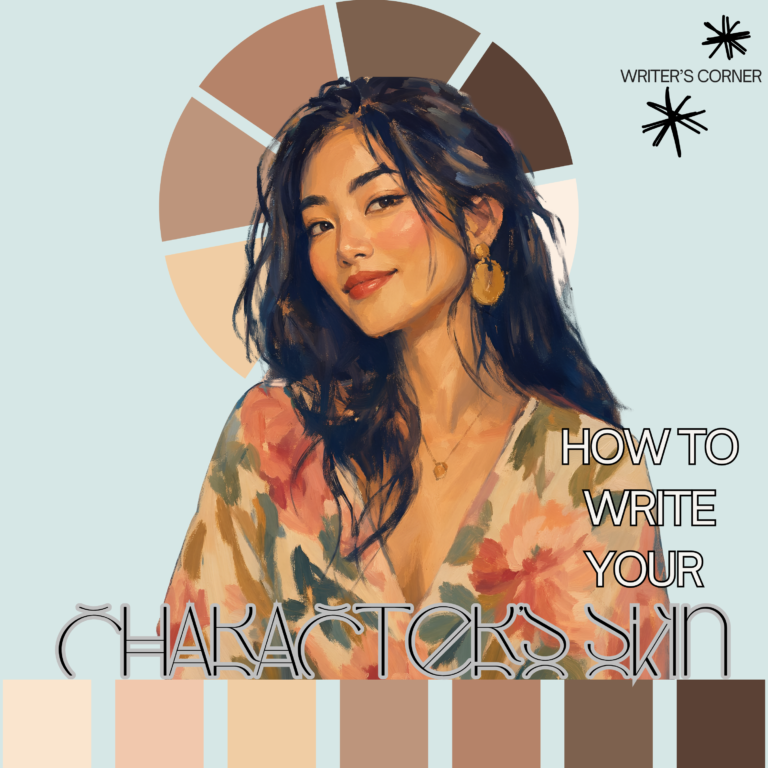
1. Character Skin Colour (Hue)
Skin colour is often the first thing writers think about when describing a character. However, colour is only the starting point.
Your goal is not to find one perfect word. Your goal is to help your reader visualize the character.
Common colour descriptions can include:
- Honey
- Caramel
- Golden
- Almond
- Cinnamon
- Chestnut
- Walnut
- Cocoa
- Mocha
- Espresso
- Ebony
- Cream
- Beige
- Sand
- Bronze
Remember, colour descriptions can appear across many different backgrounds. A character’s skin tone is about the individual, not a label.
2. Character Undertones
Two characters can have similar skin colours but completely different appearances because of their undertones.
Undertones describe the subtle colours beneath the surface.
Examples include:
- Golden
- Olive
- Peach
- Pink
- Copper
- Bronze
- Neutral
- Cool
- Warm
Adding an undertone can instantly make your character description feel more specific.
Instead of:
“Her skin was brown.”
You can create more imagery:
“Her warm brown complexion carried golden undertones beneath the sunlight.”
3. Character Surface Finish and Appearance
Colour tells your reader what shade your character’s skin is. Surface finish tells your reader how it looks.
Skin can appear:
- Luminous
- Dewy
- Matte
- Radiant
- Velvety
- Smooth
- Polished
- Satin-like
- Weathered
This category helps you describe the visual quality of your character’s skin without focusing only on colour.
4. Character Skin Texture
Texture helps your reader experience the character beyond what they see.
Skin may appear:
- Silky
- Soft
- Rough
- Calloused
- Dry
- Weathered
- Coarse
- Supple
- Leathery
- Scarred
A warrior, a farmer, an artist, and a child will not have the same skin texture because their lives shape them differently.
5. Character Skin Condition
Skin changes throughout life and even throughout a single day. Your character’s skin can reflect their current circumstances.
Consider descriptions such as:
- Clear
- Freckled
- Bruised
- Sunburned
- Chapped
- Scarred
- Inflamed
- Peeling
- Dust-covered
- Sweat-dampened
These details can reveal what your character has recently experienced without needing to explain everything directly.
6. Character Skin in Light and Reflection
Lighting can completely change how your character appears. Think about the setting around your character. Sunlight may bring out warmth. Firelight may reveal golden or copper tones. Moonlight may create cooler shadows.
Examples:
- Her skin glowed beneath the afternoon sun.
- Firelight highlighted the bronze tones in his complexion.
- Rain left his skin shining beneath the streetlights.
Light allows your character’s description to move instead of staying frozen.
7. Character Skin and Life Experience
Some of the most memorable descriptions come from what life has left behind.
Skin can reveal:
- Scars
- Tattoos
- Stretch marks
- Birthmarks
- Freckles
- Beauty marks
- Wrinkles
- Callouses
- Age spots
These details create questions in your reader’s mind.
How did they get that scar?
Why do they hide that tattoo?
What story does that mark carry?
8. Character Skin Reactions
Skin is one of the most expressive parts of the body.
It reacts to:
- Fear
- Anger
- Embarrassment
- Cold
- Heat
- Stress
- Excitement
Your character’s skin may:
- Flush
- Pale
- Sweat
- Prickle
- Tremble
- Break into goosebumps
- Turn clammy
These small reactions help your reader feel the moment instead of simply watching it.
9. Character Skin Through Movement
Skin does not exist separately from your character’s expressions. A smile, a frown, or a moment of tension changes how skin appears.
Look for details like:
- Creased
- Tightened
- Softened
- Relaxed
- Quivering
- Stretched
The small movements of your character’s face can reveal emotion before dialogue ever begins.
10. Character Skin and Environment
Your character’s surroundings leave evidence behind. Weather, work, and lifestyle can affect appearance.
Your character may have:
- Wind-chapped skin
- Sun-kissed skin
- Rain-slicked skin
- Salt-streaked skin
- Smoke-stained skin
- Dust-covered skin
The environment becomes part of your character’s visual story.
11. Character Skin Through Age and Change
Skin changes as your character moves through life.
A young character, an older character, and someone who has endured years of hardship will not have identical descriptions.
Consider:
- Youthful
- Mature
- Lined
- Time-worn
- Softened
- Hardened
- Restored
- Healed
Age does not erase beauty. It adds history.
12. Character Skin’s Distinctive Features
The final layer is what makes your character recognizable.
These small details help your reader remember them.
Examples include:
- A unique birthmark
- A faded scar
- A tattoo
- A pattern of freckles
- A beauty mark
- A distinctive feature
The strongest character descriptions often come from the details that nobody else has.
Before You Get Back To Your Novel
When you describe your character’s skin, remember that you are not just choosing an adjective. You are creating a person. Start with colour if you need to. Add undertones, texture, light, condition, and personal details as you build your character. You do not need to describe every detail at once. Sometimes one powerful detail is enough to make your reader see them clearly.
Writing better character descriptions is a skill that grows with practice. Every draft teaches you something new.
The goal is not perfection. The goal is creating a character your reader can see, understand, and remember.
Need Help Writing & Building Your Characters, Click the image below

Stay faithful, stay quirky, and stay writing.
With love and fire,
V.S. Beals
Writer. Watchwoman. Woman of the Word.