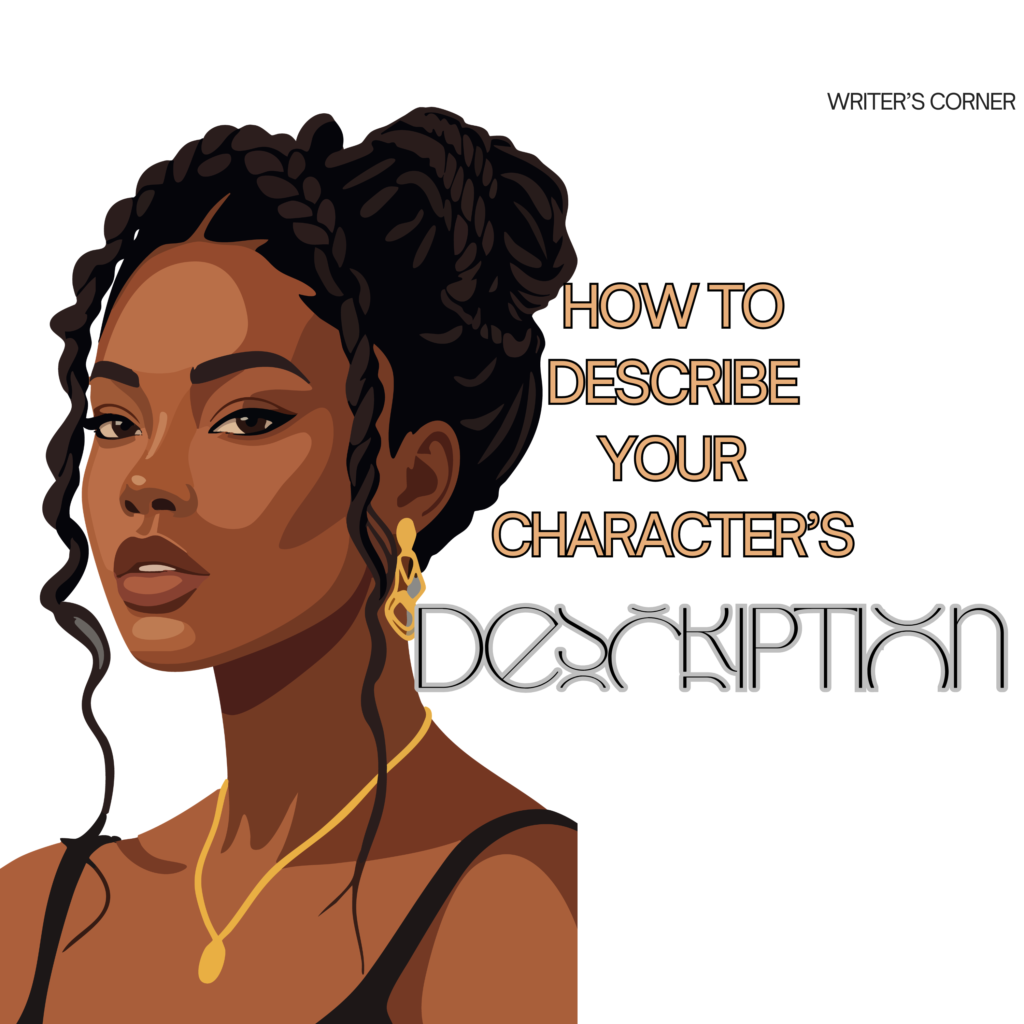
If you’re writing Black characters, their hair isn’t an accessory — it’s part of the character’s lived experience. Whether your character is Black, biracial, Black-Latina, Black-Indigenous, Black-Asian, Caribbean, African, or simply has Black ancestry and textured hair, there’s a short list of mistakes writers make over and over again. Here’s what to watch for when writing Black hair, and how to fix it.
1. Describing Every Black Character’s Hair as “Curly”
This is the fastest way to tell readers you don’t understand Black hair.
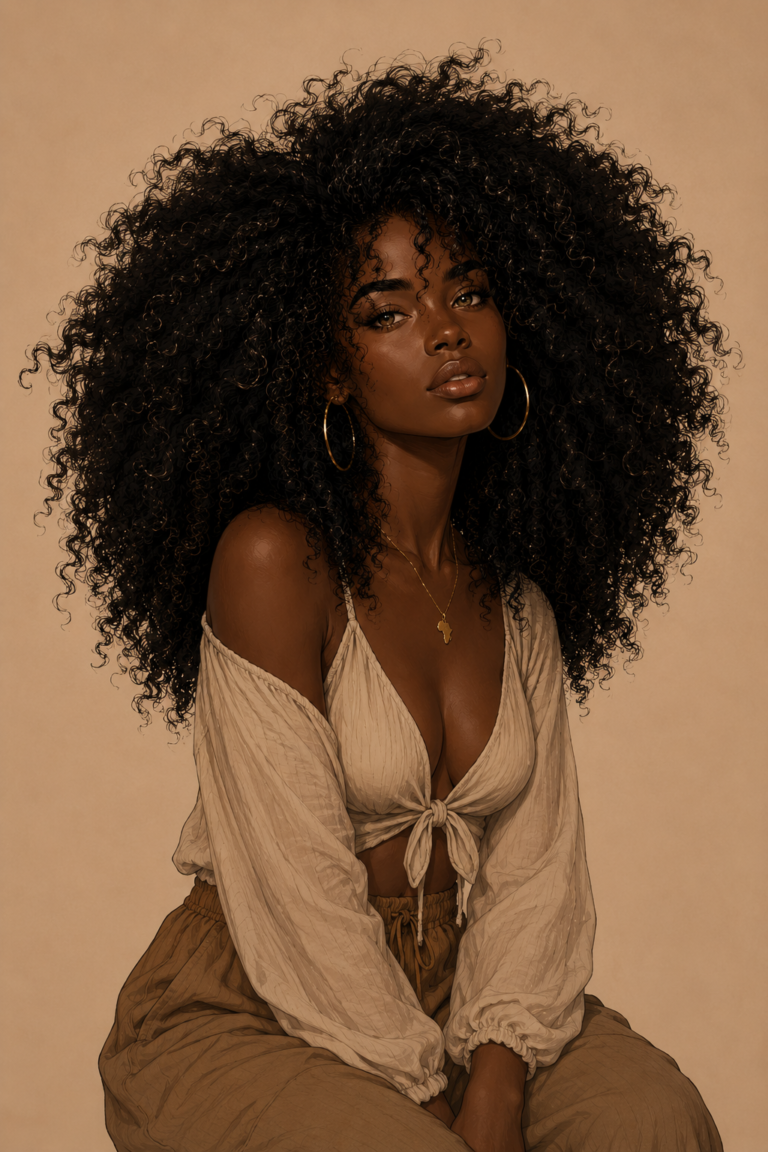
Black hair can be wavy, curly, coily, kinky, loc’d, relaxed, braided, twisted, straightened, pressed, or covered. Saying “curly hair” tells readers almost nothing — a loose 3A curl and a dense 4C coil are not remotely the same thing.
Get specific instead.
Not: “She had curly hair.”
Better: “Her tight coils shrank close to her scalp after washing, creating a soft halo around her face.”
2. Treating Black Hair Like It Behaves Like White Hair
Many writers have a Black character run a brush through dry hair, wake up with perfect curls, or wash and style it in ten minutes. For many textured hair types, that’s simply not how it works.
Many Black women detangle in sections. Wash day can take hours. Humidity can undo a silk press in an afternoon. Protective styles may stay in for weeks at a time.
Hair maintenance is part of the reality — and part of the character’s day-to-day life, if you let it be.
3. Using Food Comparisons for Every Description
Chocolate. Mocha. Caramel. Cocoa. Cinnamon. Readers are tired of it — and hair gets the same treatment. Chocolate curls. Chocolate ringlets. Chocolate waves.
Hair is not a dessert menu.
Describe the actual texture, shape, volume, movement, and style instead. Your reader will picture it more clearly, and your character will read as a person instead of a metaphor.
4. Making Natural Hair Sound Wild, Untamed, or Unprofessional
Words matter. Many writers describe afros, coils, and textured styles as wild, unruly, chaotic, out of control, or messy — while a straight hairstyle gets called elegant, polished, or sophisticated.
Natural hair is not automatically disorder. An afro can be perfectly shaped. Twists can be neat. Locs can be professional. Coils can be elegant.
The language you choose reveals your bias, whether you intend it to or not.
Like what you’re reading so far? Check out our Character Building Workbook
5. Forgetting That Black Hair Changes
A Black woman may have six completely different hairstyles in one month: a wig on Monday, a silk press on Friday, knotless braids two weeks later, a twist-out the month after, locs three months down the line. Hair is often versatile, and it changes far more often than many writers account for.
Many writers describe a hairstyle once at the start of the book and then forget it exists for the rest of the story. Let hair evolve alongside your character — it’s a small detail that signals you’re paying attention.
6. Writing Hair That Defies Physics
We’ve all seen it: a character with waist-length 4C hair that never shrinks, never tangles, never requires moisture, and flows in the wind like a shampoo commercial.
Textured hair has physical properties. Coils shrink. Braids have weight. Locs gain length and density over time. Afros have volume. Understand the texture before you describe it, and the description will hold up under scrutiny from readers who live this every day.
7. Ignoring the Emotional Relationship Black People Have With Hair
Hair is rarely just hair. It’s tied to family traditions, identity, beauty standards, workplace experiences, childhood memories, cultural pride, and personal freedom.
A mother teaching her daughter to braid. A teenager getting her first relaxer. A man sitting in the same barber chair every Saturday. A woman cutting off damaged hair and starting fresh.
Moments like these tell readers far more than a physical description ever will — and they’re often where the real character development lives.
8. Thinking There Is One “Black Hair Experience”
There isn’t. A Nigerian woman, a Jamaican woman, a Black Canadian woman, an Afro-Latina woman, a biracial woman, a woman with 3B curls, a woman with dense 4C coils — they may all have completely different relationships with their hair.
The biggest mistake writers make is assuming Black hair is one thing. It isn’t.
Black hair is incredibly diverse, and the best writers learn that diversity before they put words on the page — because authenticity isn’t about adding a Black character. It’s about understanding the details that make that character feel real.

I know writing has its ups and downs (more down than ups), but stick with it. Even if you’re not sure if you’re going to publish your novel. Keep writing because of the person it’ll grow you into. If the going gets tough, I have several free resources to help you along your journey. I listed them below.
Stay Faithful, Stay Creative, Stay Loyal, Val
Check out our last Article below