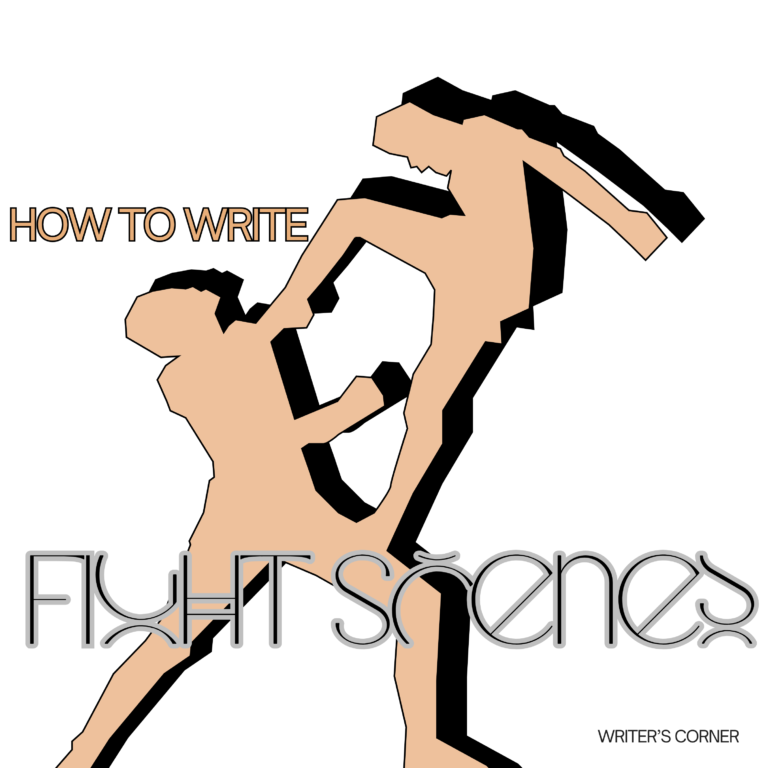
The real problem I see is that writers learn the vocabulary, then write fight scenes that still feel flat. The words were never the issue — the physical logic behind them was.
The Problem With Fight Scene Advice every writers’ guide tells you to use strong verbs. “Don’t write ‘he hit him’ — write ‘he drove his elbow into the soft ridge below the ribs.’” Good advice. But here’s the problem: most writers follow that advice and still end up with fight scenes that read like stage directions. Strong verbs. Correct anatomy. Zero impact.
The fight reads like a list of events rather than a physical experience. Characters seem to move through the scene without weight or consequence. The reader understands what happened, but doesn’t feel any of it. Tension disappears even when the choreography is technically accurate.
The problem isn’t vocabulary. It never was. The problem is body intelligence—understanding how combat actually moves through a human body, and how to translate that movement into prose that forces the reader’s nervous system to respond.
That said, vocabulary still matters. Not because it fixes the problem, but because it exposes it. If you don’t have the right words, you can’t even get to the point where the deeper issue shows up.
So here are twelve combat technique word vaults that will immediately sharpen your fight scenes. Use them properly, and your writing improves. Use them without understanding what sits underneath them, and your scenes will still fall flat.
Dirty Fighting — when control breaks and survival takes over
Dirty fighting is not technical. It is decisive, desperate, and often personal. These are not moves chosen for efficiency, but for outcome.
Word vault: bite, claw, scratch, rip, yank, pull, tear, gouge, hook, trip, shove, slam, knee, elbow, stomp, headbutt, grab, twist, drag, pin
These words signal escalation. A character using them is no longer trying to win cleanly—they are trying to end the fight. If this shows up and nothing about the fight changes—emotionally, psychologically, or tactically—then the moment has no weight.
Pain-Focused Strikes — stop naming pain and start specifying it
Most writers include pain, but they don’t construct it. They label it. That’s why it doesn’t land.
Word vault: jab, press, dig, drive, grind, crank, snap, crush, compress, tighten, hammer, pound, throb, pulse, sting, burn, shock, flare, ache, spike
Pain is tied to delivery. A grind builds. A snap shocks. A crush compresses and lingers. If the word doesn’t match the physics of the action, the reader won’t feel it. When every strike produces the same vague “pain,” the fight becomes repetitive regardless of how varied the actions are.
Write Fight Scenes That Actually Hit Hard
If you want these word vaults organized in a way you can actually use while writing, start here with our free resource: Write Fight Scenes That Actually Hit Hard.
Distraction & Disorientation — the fight is decided before impact
If your character gets hit and the reader doesn’t understand why, the scene feels random. Because it is.
Word vault: feint, fake, shift, redirect, mislead, bait, draw, blind, flash, startle, interrupt, overwhelm, confuse, crowd, rush, distort, fake-out, bait-switch
The hit is not the event. The mistake before the hit is the event. These words create that mistake. If you skip the misdirection and go straight to impact, you’re writing outcomes without causes.
Balance Breaking — fights are controlled through structure, not just strikes
Most fight scenes are written as if both characters remain stable the entire time. That’s not how bodies work.
Word vault: trip, tilt, off-balance, shift weight, hook leg, sweep, pull down, push back, spin, turn, collapse, fold, drop, drag, destabilize, unground, tilt off-center
Balance determines control. Once it’s compromised, every action becomes less effective. If your characters take hits but never lose structure, the fight will feel staged no matter how intense the language is.
Joint & Limb Control — tension through restriction, not impact
Not every fight moment needs speed or force. Some of the most effective moments come from control.
Word vault: lock, bend, twist, hyperextend, pin, trap, hold, restrict, torque, pressure, strain, immobilize, brace, secure, bind, wrench, isolate
These words reduce options. They limit movement. They force decisions. When used correctly, they slow the fight down while increasing tension, because the outcome becomes inevitable instead of explosive.
Breath & Pressure Control — remove the air, raise the stakes
Anything that interferes with breathing immediately increases urgency because it targets survival directly.
Word vault: choke, restrict, compress, press, tighten, smother, cut off, squeeze, stall, drain, constrict, clamp, suffocate, crush chest, block airflow, limit breath
These techniques work because they override everything else. The moment breath is compromised, the fight is no longer strategic. It becomes reactive and urgent.
Speed & Overwhelm — remove time, remove control
Speed is not just movement. It is the removal of decision-making time.
Word vault: rush, flood, bombard, rapid-fire, stack, layer, chain, follow-through, press forward, close distance, surge, blitz, crash in, swarm, accelerate, pursue
When a character is overwhelmed, they are no longer choosing actions. They are reacting. If your writing still feels controlled and measured in these moments, then the speed isn’t translating to the page.
Environmental Use — the fight doesn’t happen in empty space
If your fight could happen in a blank room with no changes, the environment is not doing its job.
Word vault: slam, drive, pin against, corner, trap, shove into, crash, drag across, force down, impact, collide, smash, throw into, grind against, slam down
The environment changes outcomes. Walls stop movement. Surfaces alter impact. Position shifts options. If you are not using the space, you are removing a layer of realism from the scene.
Close-Range Control — when distance disappears, pressure takes over
At close range, the fight changes from movement-based to position-based.
Word vault: clinch, grip, lock in, tighten space, close gap, body press, restrict movement, anchor, hold position, crowd, compress distance, trap arms, invade space
This is where fights become uncomfortable. There is no space to reset, no room to escape. Everything becomes immediate and restrictive, which increases tension without increasing speed.
Precision Striking — targeted actions with specific consequences
Not every strike is meant to cause general damage. Some are meant to remove specific functions.
Word vault: aim, target, focus, narrow, line up, adjust, track, lock on, release, commit, dial in, center, pinpoint, align, calculate, mark, zone in
Precision matters because it changes what the opponent can do next. If a strike lands and nothing functionally changes, then it didn’t matter as much as it should have.
Mental Control — intelligence shown through behavior, not explanation
Strategic fighters are not written through thoughts. They are written through timing.
Word vault: read, anticipate, wait, time, interrupt rhythm, break pattern, reset, control pace, decide, predict, analyze, observe, adapt, outthink, stay ahead
If you have to explain that a character is thinking ahead, you’ve already weakened it. The reader should see it through what the character does differently.
Non-Fatal Finish — control is proven at the end
Ending a fight without killing is not passive. It is controlled and deliberate.
Word vault: disable, drop, subdue, neutralize, finish, shut down, contain, stop, hold, disarm, weaken, drain, ground, restrain, settle, control outcome
This is where character is revealed most clearly. The choice to stop is just as important as the ability to continue.
Why your fight scenes are still feeling flat
You now have the words. More than enough of them.
But words alone don’t create impact. They describe action. They do not create experience. What’s missing is what happens after the action lands. How the body responds. How one moment physically changes the next. How damage accumulates instead of resetting every exchange. That layer is what makes a fight feel real. Without it, even the best vocabulary will still read like choreography.
Stay faithful, stay quirky, and stay writing.
With love and fire,
V.S. Beals
Writer. Watchwoman. Woman of the Word.
Writing You Novel & Need More Resources?
Check out our latest Article