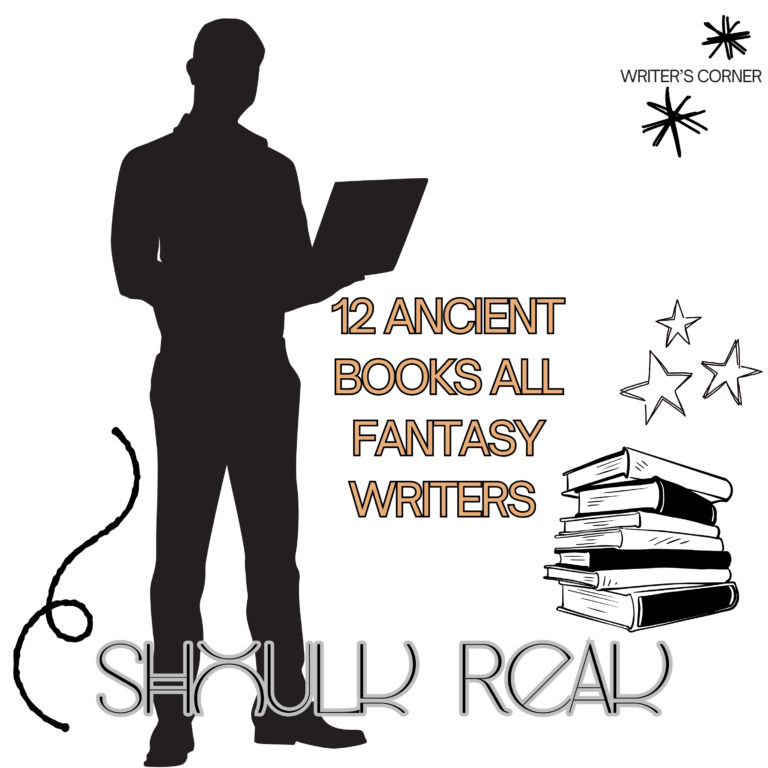
These 12 books go beyond the 66-canon books into texts that serious biblical scholars and faith writers reference but most church-raised readers have never been handed. The list moves from the most immediately useful for storytelling through the canonical prophetic texts into the scholarly deep end.
1. The Book of Enoch (1 Enoch)
If you are writing anything that touches angels, fallen beings, spiritual warfare, or the origin of evil — this is where the full story lives. The Bible names angels but doesn’t explain their hierarchy, their assignments, or what happened when the Watchers fell. Enoch does. It names Michael, Gabriel, Raphael, and Uriel, documents their specific roles and assignments, and tells the full account of the angels who left their first estate — the story Genesis 6 opens and doesn’t finish. Referenced directly in the biblical book of Jude. Any writer building a supernatural world without reading Enoch is building on an incomplete foundation.
For the non-believing writer: This is one of the oldest surviving texts in human history and one of the most influential on Western literature, art, and mythology. If you write fantasy, horror, or speculative fiction involving angels or fallen beings — your genre was shaped by this book whether you know it or not.
For the believing writer: You are writing with half the information if you haven’t read this. The spiritual warfare framework your characters need to navigate lives here.
2. The Book of Jubilees
Genesis moves fast. Jubilees slows it down. It retells the same events with expanded narrative detail — the timeline of creation, the angels present at the foundation of the world, the backstory of the patriarchs, and the divine calendar established before human history began. For any writer working in the ancient world, biblical fiction, or origin mythology, Jubilees gives you rooms the canonical text only shows you the door to.
For the non-believing writer: This is a treasure of ancient Near Eastern world-building. The level of cosmological and genealogical detail it contains is unmatched in any other surviving text from its era.
For the believing writer: It fills in the gaps Genesis leaves open and gives you the texture behind the text without contradicting Scripture.
3. The Book of Jasher
The Bible itself tells you this book exists — Joshua 10:13 and 2 Samuel 1:18 both reference it by name. It expands on Genesis through Joshua with narrative detail that makes the people of Scripture feel fully human. For any writer trying to bring ancient stories to life in modern language, Jasher gives you the human side of stories that the canonical text tells at a distance. It doesn’t contradict Scripture — it fills in what Scripture didn’t stop to explain.
For the non-believing writer: Think of this as the expanded universe of the ancient world’s most influential text. The narrative depth here is extraordinary for historical fiction research.
For the believing writer: This is the backstory behind the stories you already know. It will change how you write the people of the Bible.
4. The Book of Isaiah (KJV)
Isaiah is the most prophetically complete book in the entire Bible — covering creation, the fall, redemption, the coming of a chosen servant, and the end of all things in a single book. Chapters 40 through 66 alone contain enough material to anchor an entire writing career. For any writer working in themes of justice, suffering, redemption, or the end of the world — Isaiah is required reading.
For the non-believing writer: Regardless of your beliefs, Isaiah is one of the greatest works of ancient literature ever written. Its poetry, its imagery, and its scope are unmatched. It has influenced more writers, poets, and artists than almost any other ancient text.
For the believing writer: This is the book that will stretch your understanding of God’s character further than almost anything else in the canon. Read it slowly.
5. The Book of Revelation (KJV)
Every writer working in apocalyptic fiction, end-times narrative, or supernatural worldbuilding needs to have read Revelation — not once, but repeatedly. It reveals itself in layers. The imagery, the numbers, the seals, the trumpets, and the bowls are not random. They connect directly to Daniel, Isaiah, Ezekiel, and Enoch. The more context you bring to it each time you read it, the more it opens up.
For the non-believing writer: Virtually every apocalyptic story written in the Western world in the last 2,000 years draws from this text — consciously or not. If you write in this genre and haven’t read Revelation, you are working inside a tradition you don’t fully understand yet.
For the believing writer: You have probably only seen the surface. Read it again with Enoch, Daniel, and Isaiah open beside it.
6. 2 Esdras (4 Ezra)
This is the apocalyptic vision that came before John wrote Revelation. Ezra receives visions of the end times, the coming judgment, the nature of the soul after death, and the final age. For any writer working in the prophetic or end-times space, reading 2 Esdras alongside Revelation gives you two witnesses to the same reality from two completely different vantage points across different generations.
For the non-believing writer: This is one of the most dramatic and psychologically complex ancient texts in existence. The dialogue between Ezra and the angel Uriel about why the righteous suffer is some of the most profound wrestling with theodicy ever written.
For the believing writer: This is a personal favorite. It is essentially the telling of Revelation before John the disciple wrote the final book of the Holy Bible. Read them side by side.
7. The Book of Daniel (KJV)
Daniel is the bridge between ancient prophecy and apocalyptic literature. The four kingdoms, the abomination of desolation, the Ancient of Days, the Son of Man coming in the clouds — all of it originates here. For any writer working in empire, power, divine sovereignty, or the end of history — Daniel is the foundational text. You cannot fully understand Revelation without it.
For the non-believing writer: Daniel is also one of the most politically sophisticated texts in the ancient world — a story about a man navigating foreign empire, maintaining integrity under pressure, and outlasting every system that tried to break him. That’s a character study worth reading regardless of your beliefs.
For the believing writer: Daniel and Revelation are the same book written centuries apart. Read them together.
8. The Book of Habakkuk (KJV)
Habakkuk is three chapters — a prophet who argues with God directly, receives an answer that doesn’t look like what he expected, and then responds with one of the most powerful declarations of faith in all of ancient literature. For any writer working in themes of injustice, unanswered questions, suffering, and the tension between what is and what should be — this is the text.
For the non-believing writer: Strip the theology and what you have is one of the most honest pieces of ancient writing ever produced — a man demanding answers from the universe and learning to live with the tension of not getting them cleanly. That’s every protagonist worth reading.
For the believing writer: This is the theology of waiting. If you are writing a character who trusts God in a season that makes no sense — Habakkuk is their story.
9. The Wisdom of Solomon (Apocrypha)
The Wisdom of Solomon personifies Wisdom as a being present before creation — expanding directly on what Proverbs 8 opens and doesn’t finish. For any writer working in themes of divine wisdom, cosmic order, or the nature of knowledge itself, this text gives you a framework that no other ancient source provides in the same way.
For the non-believing writer: The personification of Wisdom as a cosmic feminine presence predates most of the mythology you may already be drawing from. This is a primary source, not a derivative.
For the believing writer: This gives theological depth to one of the most referenced but least understood concepts in all of Scripture — Wisdom as a being, not just a virtue.
10. The Book of Tobit (Apocrypha)
Tobit is one of the only extended narrative texts in the ancient biblical library that features an angel — Raphael — as a sustained character in an everyday human story. He travels with a man, protects him, heals his father, and then reveals his identity at the end. For any writer trying to portray angelic interaction with human life in a way that feels real rather than theatrical, Tobit is the model.
For the non-believing writer: This is a masterclass in how to write a hidden supernatural character — someone whose true nature is concealed until the final reveal. The narrative technique alone is worth studying.
For the believing writer: This gives you a narrative model for divine protection and angelic presence that no canonical book provides in the same sustained way.
11. The Dead Sea Scrolls (Translated — Geza Vermes translation recommended)
The Dead Sea Scrolls are the oldest surviving manuscripts of biblical and extra-biblical texts ever discovered — including fragments of Enoch, Jubilees, previously unknown psalms, hymns, and community documents from the people who lived closest in time to the events of the New Testament. For any writer researching the ancient world, these manuscripts confirm the antiquity of texts like Enoch and Jubilees and give you access to prayers, songs, and writings that never made it into any canon but were clearly part of the living faith and culture of ancient people.
For the non-believing writer: These are primary source documents from one of the most studied communities in ancient history. If you are writing historical fiction set in or around the first century — these are non-negotiable research.
For the believing writer: The Geza Vermes translation is the most accessible starting point. These manuscripts will confirm things you already believe and introduce you to things you didn’t know existed.
12. Josephus: Antiquities of the Jews
Josephus was a first-century Jewish historian who documented biblical history, the world of the second temple, and the cultural and political context in which the New Testament was written. He is not Scripture — he is history. But for any writer trying to write ancient stories in modern language, or trying to understand why people in Scripture made the decisions they made, Josephus gives you the world they lived in. He makes the people of the ancient world three-dimensional in ways that devotional or canonical reading alone cannot.
For the non-believing writer: Josephus is one of the most important primary historical sources for the ancient Near East that exists outside of Scripture. If you write historical fiction set in this world — this is your anchor text.
For the believing writer: This is the cultural and political world your biblical characters were living in. It will change how you read every story you already know.
My Recommended Reading Order
For the writer who doesn’t know where to start:
1️⃣ Enoch — opens the angelic and spiritual warfare framework everything else builds on
2️⃣ Jubilees — fills in the Genesis backstory and ancient world-building
3️⃣ Jasher — read alongside Genesis and Joshua for narrative texture and human detail
4️⃣ Daniel and Isaiah — canonical anchors for prophecy, empire, and end-times writing
5️⃣ 2 Esdras and Revelation — read together as parallel apocalyptic witnesses
6️⃣ Habakkuk — for the theology and psychology of waiting, suffering, and unresolved tension
7️⃣ Wisdom of Solomon and Tobit — for wisdom framework and angelic narrative craft
8️⃣ Dead Sea Scrolls and Josephus — ongoing historical and cultural reference throughout your writing process
I’ll see you next week for my next article, if you’re interested in more resources checkout my two writing platforms below.
Stay faithful, stay quirky, and stay writing.
With love and fire,
V.S. Beals
Writer. Watchwoman. Woman of the Word.
Have Your Read Last Weeks Article