Category: Writing Struggles & Overcoming Them

A behind-the-scenes look into what it really means to live as a writer of faith. From daily routines to spiritual disciplines, this category offers a cozy real and raw peek into the rhythms, routines, and real-life moments of writing with God.

  • 7 Ways to write fighting scene Dialogue

    7 Ways to write fighting scene Dialogue

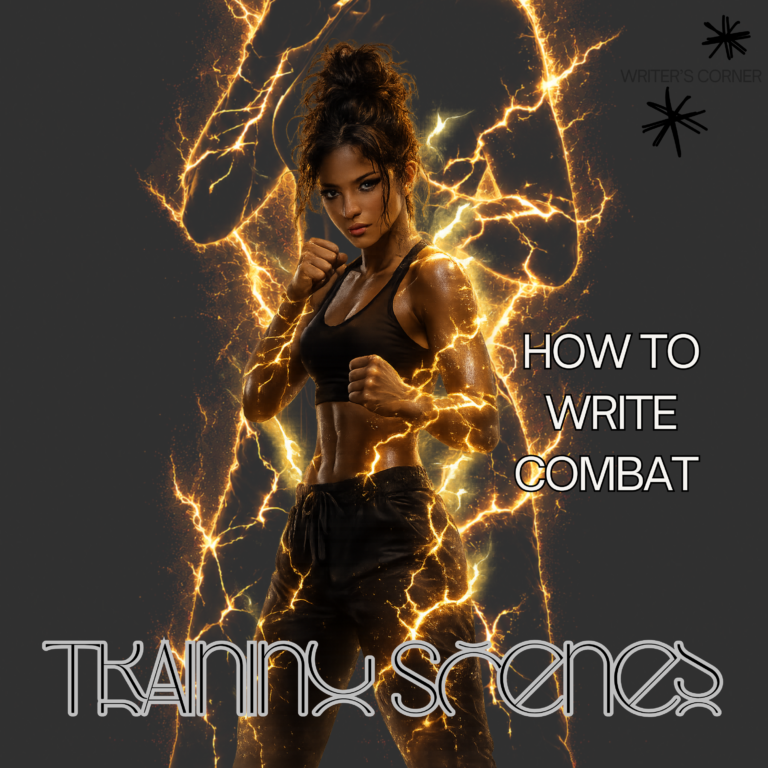
    Let’s be honest for a second… What percentage of people reading this have actually been in a fight? Not a video game fight, not a movie scene, but a real one—where fists fly, kicks miss, and your ribs ache for days after. Probably not many. And that’s why most beginner fight scenes read like awkward stage directions: “He punched. She dodged. He kicked. She blocked.” That’s what this week’s article is focused on showing my Bestie Writers how to actually write fighting scene dialogue.

    I didn’t get to avoid it. I’m the eldest sister of ten, raised by a mother and uncle who believed in martial arts the way other families believed in piano lessons. My uncle was a double Black Belt and ran his own Dojo. I know the dread of staring down an opponent three times my size and praying their next hit doesn’t put me on the floor. I know what it’s like to spar hard enough to leave with a black eye. And here’s the first truth: fights aren’t won by brute force alone. They’re won by swiftness, wisdom, and adaptability.

    The same rule applies to writing. Fight scenes aren’t about piling up punches after punches on a page. They’re about showing how every strike ripples through body, mind, and heart. That’s what makes readers lean forward and care to stay up until 3am when they have to be up and reader for the day by 7am.

    Welcome to my Fight Club (if you know, then you know).

    Download Our Fighting Scene Dialogue ( click here)


    The Hidden Effects of Strikes With Fighting Scene Dialogue

    A fight doesn’t end when a fist lands. No, no, no my Bestie Writer, that’s just the beginning. Strikes are like stones dropped in water—the impact is the splash, but the ripples change everything around it. Hitting one of the hot spots can take your opponent down, no matter how big they are.

    • Physical Pain: Not all pain feels the same. A slap burns. A rib shot leaves a dull ache that spreads with every breath. A leg kick can numb a limb until it won’t move.
    • Mobility Loss: A strained muscle or twisted ankle slows reflexes. A shoulder hit makes a sword feel heavier.
    • Disorientation: Hits to the head blur vision, make ears ring, or knock the world sideways.
    • Emotional Fallout: Pain breeds fear, panic, or blind rage. It doesn’t just bruise the body—it reshapes the mind.

    Instead of writing…
    “He punched her in the stomach.”

    Try something like this…
    “His fist sank into her stomach, and the air left her lungs in a rush. Heat spread across her ribs, her knees buckled, and panic whispered—what if she couldn’t get back up?”

    The second version doesn’t stop at the hit. It shows the ripple. That’s what pulls a reader in.


    Sensory Immersion in A Fighting Scene

    Fight scenes come alive when you let readers experience them through their senses, not yours. But don’t dump all five at once—pick two or three in each beat to keep readers grounded and not feeling overwhelmed.

    • Sight: Sweat in the eyes, blood on the knuckles, a knife glinting in the light.
    • Sound: The smack of flesh, the clang of weapons, the rasp of breath, the roar of a crowd.
    • Touch: Bruised skin, burning muscles, slippery grips from sweat.
    • Smell: Metallic blood, acrid smoke, gunpowder in the air.
    • Taste: Dust in the mouth, the copper bite of blood, grit between teeth.

    Instead of writing…
    “She swung her sword.”

    Write something like this instead…
    “She swung, the blade flashing with sweat-slick light. Metal rang as it clashed, the jolt racing up her arm until her grip nearly slipped.”

    The strike is the action. The senses make it feel real.


    Download Our Divine Abilities & Gift Guide With 40 Abilities To Choose From

    Strategic Writing of Injuries For A Fighting Scene

    Every wound matters. Injuries aren’t decoration—they’ll change the entire fight.

    • Minor: Scrapes, bruises, sprains. They hurt, slow a fighter, but don’t end the clash.
    • Moderate: Cuts, broken fingers, concussions. These force adaptation—switching tactics, protecting weak spots.
    • Severe: Broken limbs, deep gashes, internal bleeding. These can end fights or force retreat.

    Beyond the physical, injuries alter emotion. Panic sharpens, desperation grows, fear clouds judgment. That’s what makes the stakes feel real.

    Instead of writing…
    “He cut her arm, but she kept fighting.”

    Write this…
    “The blade tore across her arm, hot blood slicking her grip. Every swing grew clumsy, and fear began to crept in—how much longer before her strength bled away too? How much more seconds could she last?”


    Dialogue in A Fighting Scene with Impact

    Words in combat aren’t long speeches. They’re sharp, fast, and charged with tension.

    • Taunts: “That all you’ve got?”
    • Quick Commands: “Left!” “Duck!” “Now!”
    • Inner Dialogue: Hesitations, prayers, strategies.
    • Emotional Beats: Lines tied to grudge, loyalty, or desperation.

    Instead of writing…
    “They talked as they fought.”

    Write this…
    “He ducked, breath ragged. ‘You can’t win,’ she hissed, her blade nicking his jaw. His chest tightened—not from the cut, but from the truth buried in her words.”

    Here, dialogue doesn’t slow the action. It heightens it.

    Create Your Character’s Profile Template Editable In Canva or Download & Print


    Engagement Techniques for A Fighting Scene

    Keeping readers hooked requires more than just action. It’s about rhythm, stakes, and surprise. Just like a real fight, you have to time it just right.

    • Varied Pacing: Mix rapid-fire exchanges with tense pauses.
    • Clear Stakes: Readers must know what’s at risk—life, honor, protection.
    • Motivation: Remind us why they fight. Anger? Duty? Love?
    • Unpredictability: Add twists—hidden knives, crumbling floors, sudden allies.

    Instead of writing…
    “They fought until someone won.”

    Write this…
    “He lunged, only to slip on blood-slick ground. She pressed forward, blade raised—until the floor gave way, sending both tumbling into the dark.”

    What happened? Where did they fall to? Now the fight is not just fists—it’s suspense.


    Powerful Action Words For Fighting Scene Dialogue

    Weak verbs flatten fights. Strong verbs give them punch.

    • Impact: Slam, crush, shatter, pummel.
    • Movement: Lunge, vault, skid, dodge.
    • Weapons: Slash, parry, thrust, stab.
    • Environment: Crash, tumble, ricochet, collide.

    Instead of writing…
    “He slammed her.”

    Try writing it like this…
    “He slammed her against the wall, plaster cracking with the force against her back.”

    The second version doesn’t just tell you he made contact—it makes you feel the impact.


    Fight Scenes Are More Than Motion—They’re Emotional Crucibles

    A fight isn’t just body against body. It’s heart against heart. What’s driving your characters will shape every move. Just think back to the Blockbuster, Mr. & Mrs. Smith. You should definitely invest an hour and a half. I promise it will advance you’re writing.

    • Fear and Anxiety: Adrenaline spikes, shaky hands, second-guessing.
    • Rage and Desperation: Aggression fueled by betrayal or loss.
    • Exhaustion and Relief: Muscles failing, but survival bringing clarity.
    • Connection to Others: Protecting a loved one, fighting for vengeance, wrestling with moral conflict.

    Instead of writing…
    “They kept fighting.”

    Write this…
    “Her arms trembled, her chest burned, and still she raised her blade. Not because she had strength left, but because her sister stood behind her, and she refused to let fear carve its way through them both. No one touches what’s hers, unless it’s God Himself.”

    That’s the difference between action and story. Readers don’t just remember the punch. They remember the reason behind it.

    Still Not Sure?

    The best fight scenes aren’t a pile of kicks and punches. They’re layered moments of pain, sensation, injury, dialogue, pacing, language, and emotion. Each strike should ripple through the body and change the character. Each move should carry weight. And every fight should matter—because behind the clash of fists is always a clash of hearts.

    When you sit down to write your next fight, don’t ask, “Who throws the punch?” Ask, “What happens after they throw that punch?”


    If you need a fresh pair of eyes, leave me a comment and send over your fight scene to my email address vs@vsbealswrites.com or/and vsbealswrites@gmail.com

    Remember To Check Out Our other Blogs For Helpful Writing Tips


    Stay faithful, stay quirky, and stay writing.
    With love and fire,
    V.S. Beals
    Writer. Watchwoman. Woman of the Word.


    Leave a Reply

    Your email address will not be published. Required fields are marked *

  • 6 Dialogue Mistakes That Make Your Novel Fall Flat (And How to Fix Them Fast)

    6 Dialogue Mistakes That Make Your Novel Fall Flat (And How to Fix Them Fast)

    What You’ll Find Here Part One of the “11 Dialogue Tools That Level Up Your Novel” Series

    If your novel’s dialogue sounds like your characters are trapped in a Zoom meeting with bad Wi-Fi, we need to talk.

    Because nothing — nothing — makes a reader skim faster than cardboard conversations. And nothing makes them fall in love with your characters faster than dialogue that feels so real, you almost check to see if they’re sitting next to you.

    The good news (and no, we’re not talking about the Gospel), you don’t need a literature degree, a smoking pipe, or a weird tweed jacket with elbow patches to nail dialogue. You just need to stop making the mistakes that flatten your scenes.

    This is Step One in my Dialogue Mastery Series — your personal crash course in writing conversations that are addictive to read. Today we’ll cover the first six tools (and their common mistakes). In Part Two, we’ll tackle the next five, including the one bestselling authors swear by (but never admit to using).


    1. Expressive Dialogue

    Common Mistake: All your characters sound like Siri or an AI remix of one.
    Why It Hurts Your Story: Readers can’t bond with “generic voice” characters. Expressive dialogue builds personality and makes readers hear them as real people.
    Fix: Use speech patterns, slang, and tone to show personality — without drowning in awkward phonetic spelling or thick accents.

    Sound familiar?

    “I am not happy with this decision.”

    Improve with something similar to this:

    • “Oh, that’s cute. You think I’m just gonna smile and nod like I’m a Yorkville mannequin?”
    • “Sure, I’m fine,” she said, stabbing her straw into her iced latte like the lid had personally offended her, and not me.
    • “That’s your grand plan, seriously? Just to think I waited around for threescore millennia for someone who thinks suicide missions count as strategy.”

    Try This: Take one of your flattest lines and rewrite it three ways — sarcasm, gentleness, and frustration — without stating the emotion directly.


    6-Pack | Amazon Basics Narrow Ruled Note Pads

    2. Action-Linked Dialogue

    Common Mistake: Dialogue floating in space, like talking heads in a void.
    Why It Hurts Your Story: Readers can’t “see” the scene, so the words lose impact.
    Fix: Anchor speech to actions or movements. It keeps the pacing alive and the setting clear.

    Flat Version:

    “I don’t care.”

    Improve with an action-linked dialogue similar to this:

    • I shoved the notebook across the table. “I don’t care.”
    • He reloaded the pistol without looking at me. “I don’t care anymore River, what you do is no longer any concern of mine.”

    Try This instead: Write a short exchange where every line of dialogue includes an action beat — no floating voices allowed.


    3. Sensory-Linked Dialogue

    Common Mistake: You’re telling us what’s said but ignoring what’s felt.
    Why It Hurts Your Story: Dialogue without sensory grounding can feel weightless. Sensory detail makes it visceral.
    Fix: Let a smell, sound, texture, or taste bleed into the line.

    Flat Version:

    “I can’t do this.”

    Sensory-Linked Dialogue:

    • The copper taste of blood lingered on my tongue, not realising I was nibbling on the inside of my cheek. “I can’t do this.”
    • Her perfume was everywhere — honey and vanilla — and I couldn’t breathe. “I can’t do this.”

    Try This Instead: Rewrite a tense exchange in your WIP using at least one sense other than sight.


    100 Personalized Iron-on Fabric Labels

    4. Repetitive Dialogue

    Common Mistake: Repetition that’s unintentional and boring.
    Why It Hurts Your Story: Mindless repetition drags pacing. Controlled repetition creates rhythm, emphasis, and voice.
    Fix: Use it with purpose — to hammer a point or reveal a character’s state of mind.

    Unintentional Version:

    “I said no. No.”

    Controlled Dialogue:

    • “No. No. And in case your ears are decoratively selective — still no.”
    • : “I told you I loved you. I told you. I told you. And you still left.”

    Try This Instead: Pick an emotional moment and use repetition intentionally to build intensity — without making the reader want to skim.


    Paper Mate InkJoy Retractable Ballpoint Pens


    5. Internal Dialogue Juxtaposition

    Mistake: Every thought matches every spoken word.
    Why It Hurts Your Story: Predictable equals boring. Contrasting internal thoughts with outward words creates tension, irony, or humor.
    Fix: Let characters hide, lie, or filter their true feelings.

    Too On-the-Nose:

    “I’m fine,” she said, and she was ‘fine.’

    Juxtaposed Dialogue Version:

    • “I’m fine.” (meanwhile, I’m three seconds from throwing a chair through the drywall.)
    • (Suspense example): “It’s all under control,” he said, mentally calculating how fast he could run.

    Try Something To This Instead: Take a calm line in your manuscript and pair it with a chaotic or contradictory internal thought.


    Staedtler Mars Plastic Vinyl


    6. Emotionally Juxtaposed Dialogue

    Common Mistake: Dialogue matches the exact mood of the moment — predictable.
    Why It Hurts Your Story: Readers see it coming. Flipping the emotional tone surprises them and deepens impact.
    Fix: Use humor in heartbreak, calm in chaos, or understated words in explosive moments.

    Predictable Version:

    “I’m furious!” I screamed.

    Juxtaposed Dialogue Version:

    • (From River): “Oh, this wasn’t on the menu tonight,” I said while the house burned.
    • (Romance breakup example): “Well,” she said, folding his shirt with ridiculous care, “I guess that’s that.”

    Try This instead: Take a high-drama scene and rewrite it with the opposite emotional tone in the dialogue.


    15 Mistakes That Will Ruin Your First Chapter


    Looking to learn more? Next in the Series

    In Part Two of the Dialogue Mastery Series, we’ll cover:

    • The “Invisible Tag” secret
    • Pacing dialogue for tension
    • Using silence as a weapon
    • Layering subtext
    • And the dialogue tool I’ve never seen taught, but every bestselling author uses.

    Subscribe so you don’t miss it — and if you want the full workbook version of these lessons They’re coming soon (with extra examples, exercises, and actual examples from my novels in every chapter), Subscribe Here so you’ll be the first to know when we drop the Dialogue Workbook Set.


    Stay faithful, stay quirky, and stay writing.
    With love and fire,
    V.S. Beals
    Writer. Watchwoman. Woman of the Word.


    Leave a Reply

    Your email address will not be published. Required fields are marked *

  • 7 Ways to Write Expressive Dialogue (Without Saying Exactly What They Mean)

    7 Ways to Write Expressive Dialogue (Without Saying Exactly What They Mean)

    Expressive dialogue can either make your story sing like an angelic choir or fall flat like a deflated balloon at a surprise party nobody wanted.

    And here’s the thing about expressive dialogue, they don’t teach you this in those grammar-heavy writing courses. And I would know, I double majored in English and Classics at University of Toronto. Of course the professors teach you what it is, but it’s not something they focus on. Most writers focus on what their characters are saying, but the power is often in what they’re not saying. In between the lines, in the tension behind the words, in the trembling fingers or the slammed cupboard door—that’s where your reader truly connects. You want your book to play out like a scene in your reader’s head, consider that 90% of communication is non-verbal and you’ll quickly become an expressive writer.

    So today, I’m giving you the 7 ways to write expressive dialogue without your characters spelling it all out like a Sunday school lesson. We’re going deeper. We’re going to dig deep and start writing scenes your readers wished were movies.

    And if you’re new to this, don’t sweat it. No one starts out writing award-winning dialogue on their first draft. (If they say they do, they’re lying or just not telling you the whole truth. Give yourself grace. Growth lives in the rewrites. One day you’ll be giving this advice to someone else. Promise.

    Let’s start writing books worthy of a screen play.

    Lifewit 6 Pack Clothes Storage Bags (click here)


    Expressive Dialogue Tip 1. Let Their Hands Speak

    Body language doesn’t lie—but your characters might.

    The hands are traitors to the tongue. And most people have majority of their ‘tells’ in their hand movements alone. Your character may be saying one thing, but their hands? They’re out here testifying the truth.

    “Of course I trust you,” he said, his fingers tightening around the glass until it cracked.

    You don’t need to come out and have your characters calling each other names. You didn’t need to say he was lying through his teeth—the glass did that for you.

    When do you use this type of expressive dialogue? You should use this when your character is suppressing emotion, lying, or barely keeping it together.
    Try not to over think it. Keep gestures specific and intentional. Instead of “she fidgeted,” go with “she twisted her wedding ring until it left a red mark.”

    Bedside Caddy Hanging Storage Bag With 8 Pockets (Click Here)

    Expressing Body Language in Fiction Writing.


    Expressive Dialogue Tip 2. Echo Their Tone with Action

    Let the body and the voice work together—or clash intentionally.

    This is how you anchor emotional intensity. If your dialogue is whispered, screamed, or sarcastically spat out, match it with physical cues that reflect or subvert it.

    “Say it again,” she whispered, but her nails were already digging into her palm.

    This line doesn’t just tell us she’s tense—it lets us feel it in our own skin.

    Use This Expressive Dialogue When: You want to create suspense, edge, or when tone matters more than content.
    Quick Tip: Match the character’s tone with either their breath, posture, or tension points (jaw, hands, shoulders).

    Amazon Basics Wide Ruled Lined Writing Note Pads, 8.5 inch x 11.75 inch


    Expressive Dialogue Tip 3. Include Contradictory Emotion

    What they say vs. what they show = delicious tension.

    Contradictions are juicy (maybe not in real life, but reading them, much needed). People do it all the time. “I’m fine.” “I’m happy for you.” “I don’t care.” Lies. Beautiful, fragile lies they tell. Layering what’s said with what’s shown creates authentic, soul-deep characters.

    “I’m so happy for you,” he said with a smile too wide and eyes that didn’t quite match. I don’t even think he believed it.

    The disconnect makes readers lean in. They don’t trust this character, and they probably shouldn’t. That’s intentional. You want your readers to love, like, and absolutely dislike a character. Let’s be real, we all roll our eyes when a certain character steps into the scene.

    Use This Expressive Dialogue When: You want to show internal conflict, bitterness, jealousy, or grief masked as joy.
    Quick Tip: A character’s words should never always match their feelings. We’re complex. Your characters should be too.

    Stylus Pen Set of 20

    Stylus Pen Set of 20 Pack, Universal Capacitive Touch Screen Stylus Compatible with iPad, iPhone, Samsung, Kindle Touch, Compatible with All Device with Capacitive Touch Screen


    Expressive Dialogue Tip 4. Use the Environment

    Allow their world to be a character in itself. Let it their surroundings speak too.

    Your characters don’t exist in a vacuum. Unless you have them living in a huge bubble, and even then, the bubble is the environment. How they interact with their surroundings says just as much as what comes out of their mouths. When used well, the environment becomes emotional shorthand.

    “I didn’t mean to,” she muttered, tracing shapes in the spilled coffee on the table.

    She’s not just avoiding cleaning the mess. She’s spiraling. She’s dissociating. That coffee stain is doing more emotional labor than a therapy session. These are the non-verbal cues we notice in real life that need to be included on paper.

    You’ll want to use this expressive dialogue when your character is avoiding eye contact, suppressing emotion, or struggling with reality.
    Helpful tip: Weather, lighting, objects in the room—use them to mirror or contrast your character’s emotional state.


    Expressive Dialogue Tip 5. Show Speech Breaking Down

    When words fail, emotion speaks.

    Dialogue isn’t always clean. If it is, you’re probably not close enough to the character’s emotional truth. Interruptions, stumbles, repetition—they all scream vulnerability or internal war. People don’t often speak perfect grammar, not even i do and i studies English and teach it. ‘Proper English’ is often boring and not expressive enough… especially in novels.

    “If you would just—if you’d let me explain, I—dammit, just listen for once in your life!”

    See that? He’s not angry because he wants to yell. He’s yelling because he can’t make you hear him any other way.

    This dialogue is perfect when conflict hits its peak. When emotions are overwhelming. Or it could be through desperation.
    Helpful Tip: Read your dialogue aloud. If it sounds too polished for the moment, it probably is.

    Command Large Picture Hanging Strips – Damage Free Wall Hangers for Back to School Dorm Organization 


    Expressive Dialogue Tip 6. Anchor Emotion to Clothing or Objects

    Sometimes, the story is all in the details.

    Your character’s hands keep returning to their scarf. They’re smoothing the same corner of the napkin. Repeating a ritual that they may not even be aware their doing. Why? Because they’re not okay.

    “It’s nothing,” she said, picking invisible lint from her sweater sleeve for the third time. If she picks at it any more, she’s going to need two knitting needles.

    That lint isn’t lint. It’s a crutch. A comfort. A distraction. We all do it—your characters should too.

    The best time to use an expressive dialogue similar to this is when Your character is anxious, avoiding emotion, or trying to self-soothe.
    Helpful Tip: Choose one item your character always has with them, and let it hold meaning. And while they’re anxiously distracted with their own thought storm, have the character slowly dismantle the item.

    Organizing Dorm Desk

    Dorm Room Computer Desk 40 inch with Storage Shelves Study Writing Table for Home Office, Modern Simple Style, White (Click Here)


    Expressive Dialogue Tip 7. Let Silence Speak Loudest

    The absence of words is often the loudest sound on the page. It’s when people’s brains and thoughts start working overtime trying to fill in the gap. Majority of people are not comfortable with silence.

    This one’s a powerhouse. You don’t always need a punchline. Sometimes, the pause is the punch.

    He looked at her for a long moment before saying, “Okay.” Then he turned, picked up his keys, and left without another word.

    What’s unsaid here? Everything. Love. Regret. Goodbye. Forgiveness. Or maybe the lack there of.

    This is great to use when You want the reader to feel the weight of what wasn’t said.
    Helpful Tip: Don’t fear white space. Let the silence breathe. Don’t feel pressure to need to fill up every space available.


    Let’s Wrap This Blog Up So You Can Get Back To Writing

    Here’s the truth, My Bestie Writer: readers don’t remember perfect grammar, especially in fiction novels. People do not speak in perfect grammar. That’s the honest truth. Every accent has their own phonetics. Readers remember how your story made them feel. Expressive dialogue builds emotional bridges between your characters and your reader. It creates intimacy. Trust. Tension. And unforgettable scenes. Expressions are what makes people remember.

    If your dialogue is always direct and right-on-the-nose, you’re robbing your story of its depth. Real people aren’t that simple. Majority of real people believe they’re more complicated than they actually are and they low-key love reading of someone that is exactly like them. Normal people are not boring and neither should your characters be


    And hey—if you’re reading this thinking, “Oh no. I haven’t done any of this,” take a deep breath. That just means you’re ready to grow.

    Writing is a journey, not a checklist. You’re not behind—you’re becoming. One well-placed pause, one shaky hand, one line of dialogue that lands like a gut punch… That’s all it takes to change the whole scene.

    So take what you need. Practice it. Revisit old chapters. Experiment with new ones. Trust me—you’re not “too new” or “too late.” You’re right on time.


    Want More Help with Dialogue, Characters, and Emotional Depth?

    Subscribe to my Mailing list and I’ll notify you each time I drop a similar blog or worksheet like this one.


    Certain links in our blogs are affiliate links and will earn me a small commission (if purchased) at NO Extra Cost to you. It’s a way that readers and writers help support our ministry.


    If you made it all the way here and are still interested in learning how to become an even better writer, check out our next blog 15 Mistakes That Will Ruin Your First Chapter (and How to Make Sure Readers Keep Going)

    Stay faithful, stay quirky, and stay writing.
    With love and fire,
    V.S. Beals
    Writer. Watchwoman. Woman of the Word.

    Leave a Reply

    Your email address will not be published. Required fields are marked *

  • 15 Mistakes That Will Ruin Your First Chapter (and How to Make Sure Readers Keep Going)

    15 Mistakes That Will Ruin Your First Chapter (and How to Make Sure Readers Keep Going)

    If you’re a first-time author, read this before you post Your First chapter online—or hit publish.

    The truth is, most first-time author mistakes don’t happen halfway through the book.
    They happen on page one and in the first chapter.

    So you’re writing your first book—and you’re staring at that blinking cursor, praying your first chapter sticks the landing.

    But here’s the truth: most first chapters fail. Not because the author lacks talent, or heart, or vision. They fail because the author didn’t understand what the first chapter has to do. Your first chapter isn’t just the beginning of your story. It’s the audition. The handshake. The reason someone keeps reading… or quietly backs out and chooses a different book without saying a word. Whether you’re self-publishing or aiming for traditional, your first chapter determines whether the rest of your book ever sees the light of day.

    And if you’re a first-time author? You’re more likely to fall into the same traps that kill momentum before it even begins.

    In this blog, we’re going to cover 15 first chapter mistakes that cost new writers readers, reviews, and sales—and what to do instead. These aren’t abstract writing theories. These are real issues I’ve watched tank book launches, deflate brilliant stories, and leave debut authors wondering what went wrong. Let’s fix it before you publish.

    Why? Because what you put in that first chapter determines everything. It’s the handshake, the open door, the spark of trust between reader and writer. And if you don’t get it right?

    No amount of ad strategy, launch team, or beautiful cover is going to save it.

    Let’s break down the most common, credibility-destroying, reader-repelling mistakes that first-time authors make in their first chapter—so you can avoid them like your future royalties depend on it. (Because they do.)


    Writing Home Desk

    This 40 inch desk is a great choice for small space, providing plenty of leg room.


    1. Starting with a History Dump Will Ruin Your First chapter

    Look, I get it. You’ve spent weeks—maybe months—building this world in your head. It’s full of lore, generations of backstory, maybe even a war or two. But unless your reader already knows and loves this world, they’re not here for a textbook. They’re here for a story.

    Why it flops: A heavy lore-dump in the first few pages signals to readers that you care more about explaining than inviting.

    How We Fix it: Weave your history into the narrative through character tension, mystery, or dialogue that feels natural, not forced.


    2. Delayed Conflict or Action Will Also ruin Your First chapter

    If your first chapter is nothing but a slow morning routine, some poetic weather metaphors, and internal musings—we’ve got a pacing issue.

    Why it flops: Readers don’t wait around for things to “get good.” If there’s no hook by the end of page one, they’re gone.

    How We Fix it: Introduce tension immediately. Conflict doesn’t have to mean chaos. It can be emotional, internal, or atmospheric. But it has to be present.


    3. A Passive Main Character Will hurt and ruin your first chapter

    If your protagonist is just watching things happen, following people around, or “thinking about” acting—you’re setting them up to disappear in their own story. And somewhere in the novel another main character erupts before you even realize what’s happening.

    Why it flops: Readers want to connect to someone who does something, not just someone who exists on the page.

    How We Fix it: Give your character agency early. Let us see what they want—even if they don’t get it right away.


    4. Having no Clear Stakes will ruin the first chapter

    What’s at risk? What could be lost? If your reader doesn’t know what’s hanging in the balance, they won’t feel urgency—and urgency is what keeps pages turning. Readers love to know there’s something bigger than the MC’s introduction

    Why it flops: A story without stakes is just a beautifully written nap.

    How To Fix it: Even if the big danger isn’t introduced yet, give us a reason to worry now—about the character, the relationship, the world, or the moment.


    Smooth Writing Pen Sets

     High-End Series Retractable Pens for Journaling Note Taking, Cute Office School Supplies Gifts


    5. One Voice for Every Character

    Dialogue should sound like real people talking—not like one person playing dress-up with different names. Think of text messages…if you read you and your Bestie’s messages, I’m sure you’re other friends would know the difference.

    Why it flops: If readers can’t tell characters apart, they’ll stop trying to connect with any of them.

    How To Fix it: Give each character a unique rhythm, vocabulary, and energy. Grab your handy notebook and jot down things that make each character laugh, cry, if they’re sarcastic, what they hate and what they love. If they all sound like you, it’s time for a rewrite.


    6. Genre Confusion

    Are we in a rom-com, a gothic horror, or a political thriller? Maybe it’s a Fiction Romance, if your first chapter can’t decide, your readers won’t either.

    Why it flops: Confused readers don’t stick around to get clarity. They just leave.

    How We Fix it: Nail your tone early. The genre promise should be felt before you ever come out and name it.


    7. Weak or Wandering Opening Lines

    If your first sentence is forgettable, your chapter is already in trouble.

    Why it flops: You have seconds to earn trust. A weak opening line says, “This isn’t urgent.”

    How To Fix it: Lead with tension, mystery, or movement. Ask a question. Create discomfort. Hint at something bigger. Think “what captures me in the first or second line”


    8. Writing That Tries Too Hard

    Yes, we love pretty prose. But if your first page is jammed with metaphors, similes, and lyrical wandering, readers will tap out. As their thoughts try to play catch up with all the metaphors you imprinted.

    Why it flops: Overwriting reads like insecurity. Simpler is stronger—especially at the start.

    How To Fix it: Focus on clarity. Let beauty emerge naturally, not in every line.


    Check Out Our Other Post – How To Write A Christian Fiction Novel

    9. in the first chapter create an Emotional Anchor

    If I don’t feel anything after chapter one—no curiosity, no fear, no connection—I’m out and so are your readers

    Why it flops: Readers follow emotion, not just events. Humans love to feel, especially human readers. We tend to want to feel even more. Feelings project images and images project memories.

    How To Fix it: Tie everything back to the emotional why. What does your character care about? What’s keeping them up at night?


    10. Over-Explaining in the first chapter

    Trust your reader. If you hold their hand the whole way, you’ll rob them of discovery—and of any reason to keep reading.

    Why it flops: Over-explaining feels patronizing. Readers want to be respected.

    How We Fix it: Say just enough to guide them. Let subtext do the rest of the heavy lifting.


    Lined Writing Pad

    Large classic notebook with 240 ruled pages (front and back) for notes, lists, musings, and more (Click Here)


    11. No Direction or Purpose

    Each scene needs a goal. If your chapter just exists because it’s “pretty,” it’s not pulling its weight. Everything should lead back to everything. What was the purpose of you including it when and where you did?

    Why it flops: Readers subconsciously ask, “Why am I here?” If the scene doesn’t answer, they move on.

    How To Fix it: Every scene should push plot, develop character, or raise stakes. If it doesn’t, cut it or reshape it.


    12. Insta-Love in the first chapter?

    They locked eyes and fell in love? No tension? No conflict? No buildup? Highly unlikely in Reality. The phase “Opposites attract” came from somewhere, probably two lovers that couldn’t stand eachother.

    Why it flops: Instant romance kills believability—and robs readers of what they came for: the slow burn.

    How To Fix it: Let relationships simmer. Let tension rise from something, from somewhere. Let them earn each other. The tension is the love story.


    13. Having Characters In the first chapter Who Feel Like Concepts

    If your main character is just a vehicle for a theme or a plot, but doesn’t feel real, the story will fall flat. Real characters are real people readers connect with. Take me for instance, I’m stilling waiting on a book to come out that never will, just so I can read my favourite character again.

    Why it flops: We don’t fall in love with ideas. We fall in love with people.

    How We Can Fix it: Flesh them out. What makes them weird? Flawed? Likeable even when they mess up? Give readers a reason to make your characters their new bestie


    14. Ignoring the Reader’s Experience

    This isn’t just your story—it’s also their journey. Make sure they’re not lost, bored, or confused by page five.

    Why it flops: Readers don’t owe you their attention. You have to earn it.

    How We Fix it: Read your first chapter out loud. Imagine you’re hearing it for the first time. Does it invite you in—or leave you outside?


    15. No Hook at the End of the First Chapter

    Your first chapter should end with a gut-punch, a question, or a door left wide open. Leaving the reader on the edge of their seat.

    Why it flops: If you give readers a natural place to stop, they will.

    How To Fix it: Cliffhanger. Reversal. Revelation. Something that makes us say, “Okay, just one more page.”


    Final Words From Your Blogger Editor-in-the-Wild

    You don’t need to be perfect on the first try. No one is. But if you can see these mistakes now, you can fix them before your readers find them… and quietly set your book down forever.

    Writing your first book is a wild ride. But making your first chapter unskippable? That’s where the shift happens. So go ahead—open your manuscript. Highlight what needs fixing. And remember, you’re not here to just write a book.

    You’re here to write a book people actually finish.


    Stay faithful, stay quirky, and stay writing.
    With love and fire,
    V.S. Beals
    Writer. Watchwoman. Woman of the Word.

    3 responses to “15 Mistakes That Will Ruin Your First Chapter (and How to Make Sure Readers Keep Going)”

    1. […] If you made it all the way here and are still interested in learning how to become an even better writer. Check out our next blog 15 Mistakes That Will Ruin Your First Chapter (and How to Make Sure Readers Keep Going) […]

    2. […] 15 Mistakes That Will Ruin Your First Chapter […]

    3. […] Remember To Check Out Our other Blogs For Helpful Writing Tips […]

    Leave a Reply

    Your email address will not be published. Required fields are marked *